Morocco’s Sahara Desert Travel Guide: A Slow Journey into the Desert
Morocco Sahara Desert travel guide: explore Merzouga, Zagora, and M’Hamid. Discover the best places to visit in the Sahara, top desert experiences, camel treks, desert camps, and how long to stay for an authentic Morocco desert trip.
MOROCCOTRAVEL TOOLS & TIPS
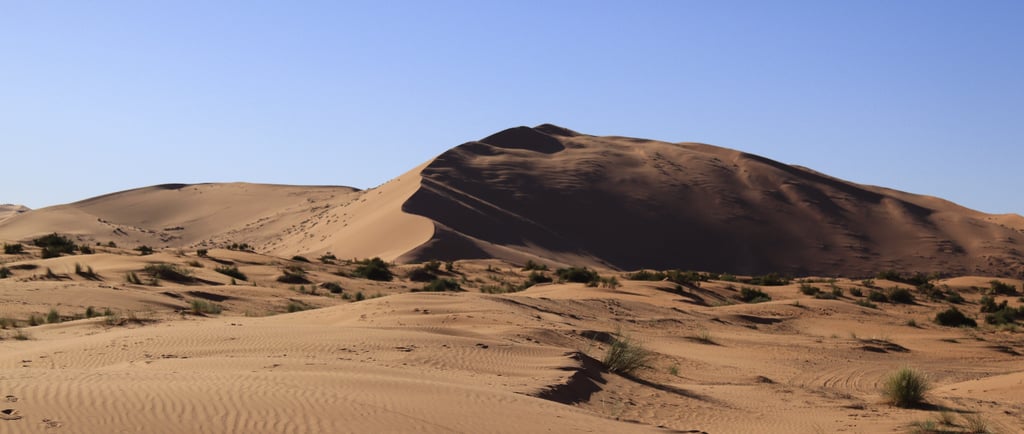
Morocco’s Sahara Desert is not a single fixed destination, but a vast landscape of shifting light, silence, and scale. It begins where the roads leave the cities behind and gradually opens into rocky plateaus, palm-lined valleys, and eventually the sand dunes of the deep desert.
Like the Atlantic coast in Morocco, the desert is best experienced as a journey rather than a place. Time slows down here in a different way—measured less by movement and more by stillness, distance, and the rhythm of heat and light across the landscape.
Most travellers experience the Sahara through a small number of established gateways in southern Morocco, each offering a different version of the desert. From the iconic dunes of Merzouga to the more remote edges near M’Hamid and the Erg Chigaga dunes, the experience changes depending on how far you go and how long you stay.
This guide explores the main desert regions, what the experience actually feels like on the ground, and how much time is needed to understand it without rushing through.


The Sahara is the world’s largest hot desert, stretching across much of North Africa and shaping the climate, culture, and geography of the region. In Morocco, the Sahara represents only the northwestern edge of this vast desert system, but it remains one of the most accessible ways to experience it. Unlike the endless sand seas often associated with the Sahara, the Moroccan Sahara is a mix of landscapes—rocky plateaus, dry valleys, palm oases, and only in specific areas, large dune systems. It is this variation that defines the experience: a transition zone between the Atlas Mountains and the deeper desert of the interior, where human settlement, trade routes, and nomadic history have long shaped how the land is travelled and understood.
Understanding Morocco’s Desert Regions
The Sahara in Morocco is often described as one destination, but in reality it is a series of distinct landscapes. The experience changes depending on how far south and east you travel, and how remote you choose to go.
Merzouga and the Erg Chebbi Dunes
The most well-known desert region is around Merzouga, located on the edge of the Erg Chebbi dunes. This is where the classic Sahara image is found: large, orange sand dunes rising sharply from flat desert plains. It is the most accessible and developed desert area in Morocco, with established routes, accommodation, and organised desert camps. For many travellers, Merzouga is the easiest option logistically and the most reliable in terms of infrastructure and experience. However, it is also the busiest and most touristic, especially during peak seasons.
Merzouga is typically reached from Marrakech, Agadir or Fes via a long overland journey through the Atlas Mountains, often broken up over one or two days. It can also be accessed more directly from eastern Morocco, but for most travellers it forms part of a multi-day route rather than a quick trip.
M’Hamid and the Erg Chigaga Dunes
Further south lies M'Hamid El Ghizlane, the gateway to the Erg Chigaga dunes. This region is more remote and significantly less developed than Merzouga. Reaching the dunes often requires off-road travel, and the surrounding landscape feels more open and less structured. There are fewer camps and fewer visitors, and the overall experience is quieter and more isolated. It is generally chosen by travellers who want a less curated and more remote version of the desert.
Reaching the dunes requires more travel and often off-road driving, but the reward is a quieter, more isolated environment. There are fewer camps and far fewer visitors, creating a more stripped-back desert experience.
Zagora: The Accessible Desert Edge
Zagora is the closest and most accessible desert gateway from Marrakech. Unlike Merzouga or M’Hamid, it does not feature large sand dunes. Instead, the landscape is a mix of rocky desert, palm valleys, and smaller sand formations. It is often used for short desert trips or overnight stays when time is limited. While less dramatic in scale, it offers a practical introduction to desert landscapes without long travel distances.
Zagora can be reached from Marrakech in a shorter timeframe, making it the most practical option for travellers who want to experience desert scenery without committing to a longer journey further east or south.
Best overall experience: Merzouga
Best for quiet, remote travel: M’Hamid
Best for short visits: Zagora
Each desert offers a different interpretation of the Sahara — from structured and accessible to remote and minimal. The “best” choice depends less on the landscape itself and more on how you want to experience time in the desert.


Reaching the Sahara Desert in Morocco is straightforward in principle but requires planning due to long distances and limited public transport to the final desert areas.
Most desert regions—whether Merzouga, M'Hamid El Ghizlane, or Zagora—are accessed via long overland routes followed by a final transfer into the desert itself.
Travelling independently:
It is possible to reach the desert independently, but only up to a certain point. Travellers can use buses, shared taxis, or rental cars to reach gateway towns such as Merzouga, Zagora, or M’Hamid. From there, however, access to the dunes typically requires local transport or coordination with a camp.
The key decision is not whether to go independently or with a guide, but how much of the journey you want to structure in advance.
For example:
In Merzouga, many accommodations are located directly at the edge of the dunes, and camel treks or 4x4 transfers are arranged locally
In M’Hamid, reaching the Erg Chigaga dunes requires off-road travel, which is not practical without a guide or organised vehicle
In Zagora, short desert experiences are usually arranged through local providers
Organised tours:
Guided tours are the most common way to visit the Sahara, particularly for travellers starting from cities such as Marrakech or Fes.
These tours can be booked locally or in advance through platforms such as Viator and similar travel websites. They typically include transport, stops along the route, camel trekking or 4x4 transfers, and overnight stays in desert camps.
While booking online is convenient, it is worth taking time to choose operators carefully. Not all tours are equal in terms of quality, and standards can vary.
Travellers are generally advised to:
Check recent reviews and detailed itineraries
Look for smaller group sizes rather than large bus tours
Prioritise operators that work with local guides and camps
Avoid experiences that feel rushed or overly commercial
Sustainability and ethical standards are not always clearly defined, but tours that are locally run, smaller in scale, and transparent about what is included tend to offer a more responsible and balanced experience.
Best Time to Visit the Sahara Desert
The best time to visit the Sahara Desert in Morocco is during the spring (March to May) and autumn (September to November), when temperatures are more moderate and conditions are comfortable for travel.
During these months, daytime temperatures are warm but manageable, making it easier to explore, walk on the dunes, and take part in activities such as camel trekking. However, even in these seasons, temperatures drop noticeably after sunset, and nights in the desert are generally cold.
Winter (December to February) is also a viable option, particularly for those looking to avoid crowds. Days are usually mild and clear, but nights can be very cold, often close to freezing, especially in open desert camps.
Summer (June to August) is the least favourable period. Daytime temperatures can become extreme, particularly in areas such as Merzouga and M'Hamid El Ghizlane, making daytime activity difficult and, at times, unsafe. Many desert camps also close during this period due to the heat, which further limits available options.
Overall, the desert climate is defined by strong contrasts between day and night. Regardless of the season, travellers should expect warm to hot days and cold evenings, and plan accordingly.
Money, Food, and What to Expect in Camps
Most desert camps in Morocco are relatively self-sufficient, and in many cases they provide everything needed for a short stay, including meals and drinking water. In more established camps around areas such as Merzouga, food is typically included in the stay and ranges from simple traditional dishes to more varied multi-course dinners depending on the level of comfort.
However, standards can vary significantly between camps. “Luxury” does not always guarantee consistency, so it is important to check in advance exactly what is included, particularly in terms of food, water, and basic amenities. In all cases, supplies are transported in from outside the desert, which means prices are generally higher than in cities.
Travellers should also bring any essential medication with them, as access to pharmacies is limited or non-existent once in the desert. While basic items are often available at camps, it is not something to rely on for specific needs.
Connectivity, Cash, and Practical Limits
Connectivity in the Sahara is limited and often unreliable. Mobile signal can be weak or completely unavailable in more remote areas, particularly around desert regions such as M'Hamid El Ghizlane and deeper sections beyond Zagora.
Wi-Fi, where available, is usually restricted to communal areas in larger camps and should not be expected to be stable or fast. For most travellers, the desert naturally becomes a low-connectivity environment.
Cash is still widely used in smaller towns and for local services, and ATMs are not always available once you move deeper into desert regions. It is therefore advisable to withdraw money in larger cities such as Marrakech or Ouarzazate before continuing the journey.


The Sahara is not something you simply “tick off” a list in Morocco. It is a place that unfolds slowly, shaped as much by the journey to reach it as by the time spent there.
From the dunes of Merzouga to the quieter stretches around M'Hamid El Ghizlane and the shorter desert encounters near Zagora, each route offers a different way of entering the same landscape. What changes is not just the scenery, but the pace, the distance, and the sense of stillness that comes with it.
It is also a place of contrasts—hot days and cold nights, long stretches of emptiness followed by moments of activity around camps, and a travel experience that feels both simple and carefully structured at the same time. Nothing is quite as remote as it first appears, yet the sense of space remains constant throughout.
From me, to you reading this: take your time with it. The desert has a way of making you do that anyway. Follow along for more guides and slow travel stories from Morocco.