The Ultimate Guide to Lisbon: Culture, Food & Must-See Sights
Explore Lisbon like a local with our comprehensive guide. Discover historic neighborhoods, iconic viewpoints, delicious cuisine, and hidden gems for an unforgettable city experience.
TRAVEL ITINERARIESPORTUGAL
Food & Drink Guide: Culinary Delights of Lisbon
Laced with history and vibrant culture, Lisbon offers a culinary landscape that is as diverse as it is delightful. One of the must-try dishes for any visitor is the renowned bacalhau à brás, a delicious codfish creation mixed with onions, potatoes, and eggs, intricately tied into Portuguese tradition. You can find this dish in many local taverns, but for an authentic experience, head to a tiny eatery in Alfama where locals dine. Pair this with a glass of Vinho Verde, a young and lightly effervescent wine that perfectly complements the dish.
Markets, such as Mercado da Ribeira, abound with fresh produce, cheeses, and cured meats. It is a fantastic place to sample petiscos, the Portuguese version of tapas, featuring small portions of various dishes that invite sharing and exploration. Be sure to try the chouriço sausage flambéed with aguardente, an experience that dazzles both the palate and the eyes. Engaging with locals at these markets often leads to delightful encounters, revealing insider tips on hidden culinary gems spread throughout the city.
An adventurous beverage to sample is ginjinha, a cherry liquor served in small cups, often enjoyed while strolling the picturesque streets of Lisbon. While the drink is popular among tourists, dedicated locals take pride in the family-owned taverns where it is served, often with a humorous tale about the origins of the drink itself. Lively discussions often arise about the best locations to savor this traditional delight.
Lastly, don’t overlook the sweet treats that Lisbon is famous for—particularly the iconic pastéis de nata. These custard tarts, best enjoyed warm with a sprinkle of cinnamon, symbolize the city's culinary heritage. Enjoy the culinary journey in Lisbon, where every dish tells a story, and every sip reveals a new facet of its rich culture.




Lisbon, the sun-kissed capital of Portugal, is a vibrant blend of history, culture, and picturesque landscapes that beckon travelers from all corners of the globe. Known for its charming neighborhoods, stunning vistas, and eclectic architecture, this city invites exploration at every turn. As you embark on your 5-day adventure in Lisbon, prepare to be captivated by the captivating histories intertwined with modern life, creating a unique tapestry that embodies the soul of Portugal.
Wander through the narrow, cobblestone streets of Alfama, where fado music echoes, and dazzling tile work adorns ancient buildings. This neighborhood captures the essence of Lisbon's character, showcasing its rich heritage while offering glimpses into the daily lives of locals. Similarly, districts like Bairro Alto and Chiado present a fresh perspective on urban living — bustling cafes, trendy boutiques, and vibrant nightlife promise something for everyone.
Your culinary journey will be equally enthralling, as Lisbon boasts an array of flavors that celebrate its maritime history and diverse influences. Indulge in fresh seafood, savor pastel de nata, and explore traditional dishes that highlight local ingredients. Every meal offers a chance to experience the cultural richness of the city, which has evolved over centuries yet remains rooted in tradition.
Looming above the city, the iconic Castelo de São Jorge offers breathtaking panoramas, setting the stage for moments of reflection as you soak in the breathtaking views. The scenic hills, colorful trams, and the breathtaking Tagus River enhance the charm of the city, making it a picturesque destination for both leisurely strolls and ambitious hikes.
As your adventure unfolds, prepare to encounter a joyful spirit ingrained in Lisbon itself — a narrative punctuated by humor, artistry, and the infectious laughter of its people. Whether a seasoned traveler or a first-time visitor, the magic of Lisbon is poised to envelop you as you embark on this unforgettable journey.
Things to Know Before You Go (or Things I Wish I'd Known):
Lisbon’s Hills Offer a Good Workout. The city’s famous hills are definitely a workout, but don’t worry, the stunning views you’ll be rewarded with are totally worth it. Plus, you’ll probably want to take a break and enjoy a glass of wine along the way!
Fado Music is a Must-See. To truly experience Lisbon, you’ve got to listen to Fado. This soulful, traditional music captures the essence of the city and adds a beautiful emotional touch to your visit.
Seafood is Part of the Experience. You can’t leave Lisbon without sampling its incredible seafood. Whether you’re a fish fan or not, the local cuisine is so diverse that there’s something for everyone, plus pastéis de nata to satisfy your sweet tooth!
Tram 28 is a Fun, Scenic Ride. A ride on the iconic Tram 28 is a great way to see the best of Lisbon. It’s charming, scenic, and gives you a chance to take in the sights from the comfort of a classic tram.
Neighborhood Guide: Where to Stay & What to Skip
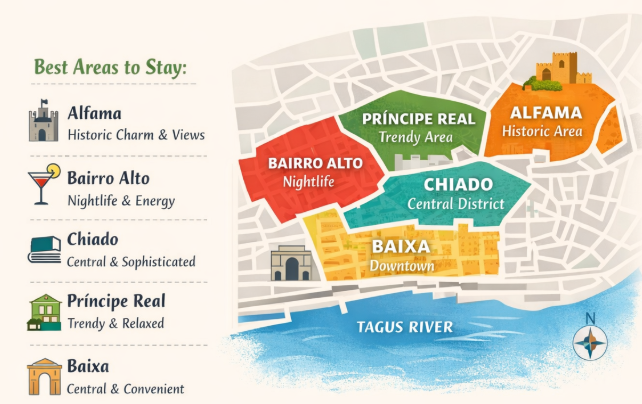
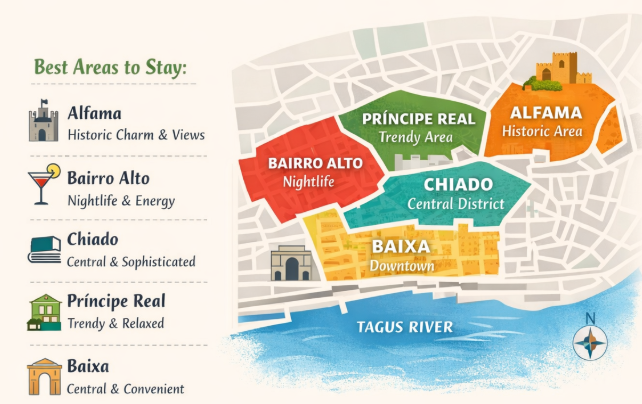
Lisbon’s neighborhoods each have their own personality. Choosing the right area can make your trip smoother, more authentic, and more enjoyable. Here’s a breakdown:
Alfama – The Historic Heart
Alfama is Lisbon’s oldest neighborhood, a maze of cobbled streets, colorful tiles, and stunning viewpoints overlooking the Tagus River. Staying here immerses you in the city’s authentic charm and makes it easy to visit landmarks like Castelo de S. Jorge and Miradouro de Santa Luzia. Alfama is perfect for travelers who enjoy history, quiet corners, and exploring on foot. That said, some areas cater heavily to tourists. Skip the large Fado restaurants that focus more on performance than food quality, and avoid souvenir shops selling generic “Lisbon” trinkets; instead, seek out small artisan stores tucked down side streets for unique finds.
Bairro Alto – Nightlife & Vibrant Energy
Bairro Alto is Lisbon’s hub for nightlife, famous for its bars, live music, and evening energy. During the day, the neighborhood is peaceful, with quaint streets, boutique shops, and vibrant street art. Staying here suits travelers who enjoy a lively atmosphere and want nightlife at their doorstep. However, the main streets, such as Rua da Atalaia, can get overcrowded and overpriced at night. Avoid heavily touristed restaurants in the central square; a short walk away, you’ll find smaller local spots offering authentic Portuguese cuisine at better prices.
Chiado – Central & Sophisticated
Chiado offers a blend of culture, history, and modern Lisbon. This central neighborhood is ideal for first-time visitors who want to be within walking distance of historic cafés, bookstores, theaters, and shopping streets. Accommodation here tends to be more upscale, and the area feels safe and convenient for exploring on foot. Tourist traps here include cafés right next to main squares—they often charge more for less quality. Similarly, some rooftop bars advertise views but deliver little; seek out hidden terraces a block or two away for a more authentic experience.
Príncipe Real – Trendy & Relaxed
Just north of Bairro Alto, Príncipe Real is a quiet, stylish neighborhood known for elegant streets, gardens, and boutique shops. It’s perfect for travelers looking for a calm stay while remaining close to nightlife and central Lisbon. The area is also popular with boutique hotels and short-term apartment rentals. Watch out for trendy “Instagram-famous” cafés that overcharge for ambience; local cafés nearby offer better coffee and pastries. Also, avoid tourist-focused shops; the neighborhood’s small markets and artisan stores are more authentic and provide a true feel of Lisbon life.
Baixa & Praça do Comércio – Central but Busy
Baixa is Lisbon’s downtown area, centered around the grand Praça do Comércio, and offers easy access to trams, shops, and riverfront walks. Staying here is convenient for first-time visitors who want to be in the heart of the action. While it’s practical, Baixa can feel crowded and tourist-heavy. Restaurants directly on Praça do Comércio are often overpriced, and souvenir shops along Rua Augusta typically sell mass-produced items. For a more authentic experience, walk a few blocks inland to find cafés, shops, and eateries where locals go.
Best Time to Visit Lisbon
Lisbon enjoys a mild Mediterranean climate, making it a great destination year-round. The peak tourist season runs from June to September, when the weather is warm and sunny, ideal for exploring the city streets, viewpoints, and nearby beaches. However, this is also when crowds are largest and prices for accommodation are at their highest.
The shoulder periods, from April to May and September to October, are often considered the best times to visit. During these months, the weather is still pleasant—warm enough for sightseeing and coastal walks—while avoiding the peak summer crowds. Hotels and attractions are generally less crowded, allowing for a more relaxed experience. Spring also brings blooming gardens and vibrant city life, while early autumn offers golden light perfect for photography along the Tagus River and Sintra’s palaces.
Winter, from November to February, is quieter and can be rainy, but it’s perfect if you prefer fewer tourists and lower prices, though some coastal hikes may be less comfortable in wet conditions.
Tip: If you plan on hiking the cliffs around Cabo da Roca or visiting Azenhas do Mar, the shoulder seasons provide the best combination of mild weather, clear skies, and quieter trails.
Getting Around in Lisbon
Lisbon is easy to explore thanks to its well-connected transport system. The metro is fast for longer trips and airport transfers, while buses and trams reach historic neighborhoods. Grab a Viva Viagem card to use metro, buses, trams, and some trains with one convenient pass. Walking is ideal in areas like Baixa and Alfama, and the iconic yellow trams are both practical and scenic.
Tram 28 and some buses can get crowded, so check apps like Citymapper or Google Maps for timing. For late-night trips or luggage, Uber and Bolt are handy. Driving in the city center isn’t recommended due to narrow streets and limited parking, making public transport and walking the best ways to see Lisbon.
Best Viewpoints in Lisbon
Lisbon is known for its beautiful miradouros (viewpoints), offering sweeping views across the city’s rooftops and the Tagus River. Among them, Miradouro das Portas do Sol is a must-visit, with its iconic outlook over Alfama’s terracotta houses and winding streets. For an even higher perspective, Miradouro da Senhora do Monte delivers one of the most breathtaking panoramic views in the city. Meanwhile, Miradouro de Santa Catarina offers a more relaxed atmosphere and is a popular spot to watch the sunset.
To make the most of these viewpoints, visit early in the morning for a quieter experience or in the evening for golden-hour light. Many have small cafés or kiosks nearby, making them perfect places to pause, take in the scenery, and enjoy Lisbon at a slower pace.


How to Take Day Trips from Lisbon
Taking day trips from Lisbon is simple and convenient, thanks to the city’s excellent transport connections. Trains are the most popular option, with regular services running from central stations like Rossio Station and Cais do Sodré Station. From here, you can easily reach destinations like Sintra and Cascais in under an hour, making them perfect for a relaxed day out. Tickets are affordable, and you can use your Viva Viagem card on many routes.
For places further afield, such as Évora, trains and long-distance buses are both reliable options. It’s best to leave early in the morning to make the most of your time. However, it’s worth noting that public transport strikes can occasionally occur in Portugal, so checking schedules in advance and having a backup plan—such as a bus or ride-hailing option—can help avoid disruptions. With a bit of planning, day trips from Lisbon are easy and well worth the effort.


These are the essential tips and practical advice to help you make the most of your time in Lisbon, from getting around the city to exploring its best viewpoints and nearby day trips. With a little planning, you’ll find Lisbon easy to navigate and full of unforgettable experiences. If you’re looking for a complete plan, including a detailed 4-day itinerary plus a day trip, click here to guide your trip from start to finish.